
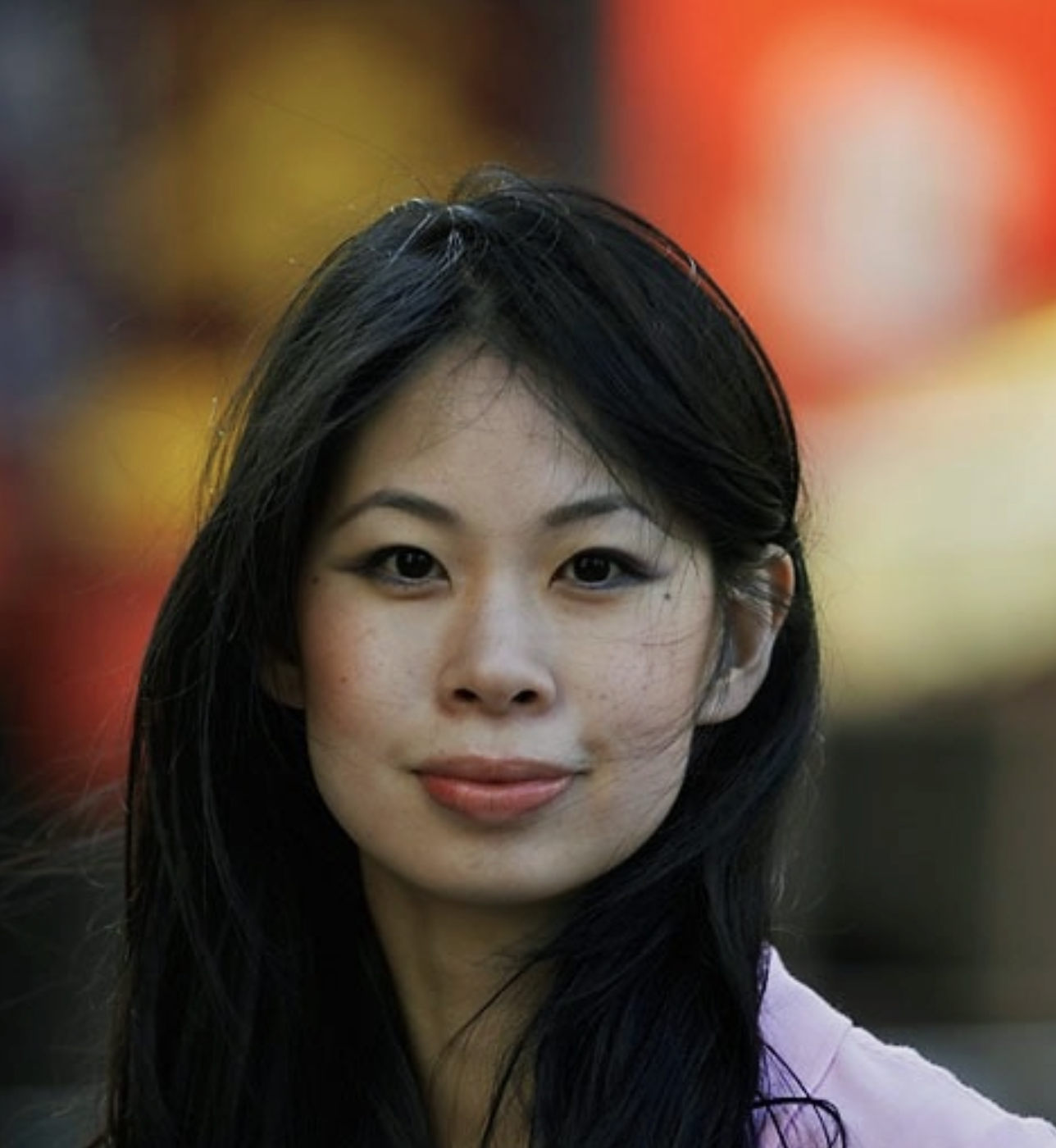
Filmmaker Georgia Lee has always been drawn to tell stories of outsiders, underdogs, women discovering their power. It’s no coincidence — she’s lived it.
Born to Taiwanese immigrants and raised across the Northeast, Lee was brought up by what she calls “a robot and a gypsy.” Her father a biochemist and her mother a dancer and artist who studied ballet and taught herself folk dances. Growing up, Lee and her mother pored over VHS tapes of classics like “The Sound of Music” and “Singin’ in the Rain,” alongside Chinese/Taiwanese dramas and fantastical Chinese martial arts films, sparking her love for storytelling.
Lee graduated from Harvard with a BA in biochemistry and seemed destined for the safe path. But working until midnight at McKinsey & Company, she kept asking herself, “What am I doing with my life?” The answer came when during a short New York University program and a VHS tape she sent of her avant-garde short film to Martin Scorsese, which caught the icon’s eye. Lee soon found herself on a plane bound for Cinecitta Studio in Rome to be Scorsese’s on-set apprentice for “Gangs of New York.” The revelatory experience became her “de facto film school.”
Even then, duty pulled her back. Lee enrolled at Harvard Business School, taking two leaves of absence before finally committing to filmmaking. Her first feature, “Red Doors,” a personal story about her Chinese American family shot in her childhood home, won several awards, including Best Narrative Feature at the 2005 Tribeca Film Festival.
A self-described “deep sci-fi nerd,” Lee wrote for “The Expanse” and “The 100” before her breakthrough: creating and serving as showrunner for Netflix’s “Partner Track,” a Trojan horse of a rom-com series that ingeniously tells a deeper story about race, gender, love, and the workplace. Based on Helen Wan’s novel about an Asian American lawyer fighting the bamboo ceiling, the series made Lee one of the few Asian American showrunners to helm a major streaming series. “I don’t even consciously set out to do it,” she says. “I’m just drawn to tell these stories” about women “discovering who they are and stepping into their own power.
Beyond the screen, Lee co-hosts mahjong gatherings with Janet Yang. The affair is “a modern-day Joy Luck Club” that brings together more than 40 Asian American women in entertainment, finance, and beyond. She advocates for more Asian American executives at studios, recognizing that systemic change requires decision-makers, not just creators. A member of Committee of 100, Lee continues amplifying Asian American voices with a message drawn from her work: “Real power comes from being true to yourself.”